
When a family member needs round-the-clock medical attention, the decision about where they receive care matters deeply. Skilled nursing homes exist for exactly this moment, providing continuous clinical oversight, rehabilitation, and personal support that goes far beyond what most families can manage alone at home.
Key Takeaways
Skilled nursing homes provide 24/7 medical care, rehabilitation, and help with daily living for seniors who need more support than assisted living or home care can provide. This level of care is essential for recovery after illness, injury, or surgery, and high-performing communities play a crucial role in preventing hospital readmissions — research suggests as many as 100,000 Medicare readmissions could be prevented each year.
At Skaalen in Stoughton, Wisconsin, skilled nursing is part of a full continuum of care, so residents can transition smoothly between rehabilitation, long-term care, memory care, and assisted living as their specific needs change.
We provide:
- This level of care provides 24-hour access to registered nurses, therapists, and physicians who help manage chronic conditions, support recovery from surgery, and respond to emergencies quickly.
- Residents receive customized care plans that enhance quality of life, covering everything from medication management to therapy goals.
- Residents receive assistance with daily living activities like bathing, dressing, and eating, while also benefiting from social programs, spiritual care consistent with Skaalen's Christian mission, and community engagement.
- Skilled nursing homes relieve the physical and emotional strain on family caregivers, keeping loved ones in a warm, homelike environment staffed by highly trained professionals.
What Is Skilled Nursing and Who Is It For?
Skilled nursing care refers to medically necessary care provided by licensed nurses and rehabilitation professionals under a doctor's direction. This includes tasks requiring clinical judgment — managing IVs, treating complex wounds, monitoring vital signs, adjusting medications — that go well beyond personal assistance with grooming or meals.
The difference between skilled nursing, assisted living, and home health care comes down to medical intensity. Assisted living helps with daily routines but doesn't offer continuous clinical oversight. Home care brings services into your house but can't match round-the-clock supervision and specialized equipment. Conditions like stroke recovery, advanced heart failure, complex wound care, or post-surgical rehabilitation are situations where this level of nursing is recommended.
Seniors may need this level of care either for a short stay, a few weeks after a hip fracture, for example, or for ongoing long-term care due to progressive conditions like Parkinson's disease or dementia. Skilled nursing communities are regulated by the U.S. Department of Health and CMS, and are subject to regular inspections to ensure consistent, high-quality care. Skaalen's skilled nursing center serves older adults from Dane County and surrounding communities who need close medical monitoring along with help with daily living.
24/7 Access to Medical Professionals and Quality Care
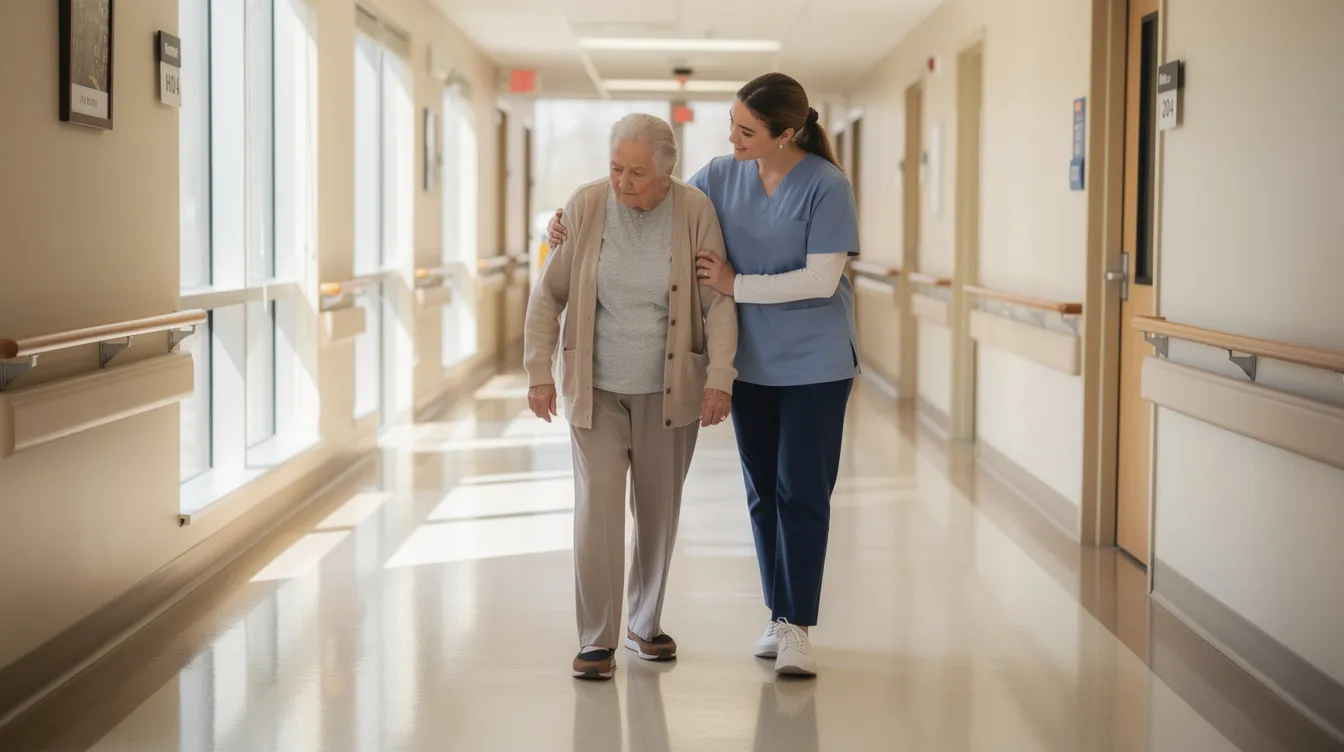
One of the biggest benefits is continuous access to a team of health care professionals — something most families simply can't replicate at home, no matter how committed they are.
The typical care team includes registered nurses, licensed practical nurses, certified nursing assistants, nurse practitioners, therapists, and on-call physicians. This multidisciplinary team provides stroke rehabilitation and manages chronic conditions such as diabetes, COPD, and heart disease through frequent assessments, vital sign checks, and adjustment of care plans. Skaalen's approach includes individualized care plans, regular interdisciplinary team meetings, and coordination with each resident's outside physicians or specialists.
Rapid response to changes in condition — shortness of breath, sudden confusion, or a fall — means early intervention that can prevent complications and reduce hospitalizations, because experienced professionals are always present to catch concerns before they escalate.
Support With Activities of Daily Living and Personal Dignity
Activities of daily living include bathing, dressing, toileting, grooming, eating, and getting around. Most seniors in this setting need hands-on assistance or supervision with several of these tasks. Trained caregivers tailor their support to what each person can still do independently, promoting dignity and autonomy rather than taking over unnecessarily.
Skaalen's caregivers focus on respectful, person-centered care. They take time to learn each resident's preferences for routines, clothing, and grooming — a commitment to knowing residents as individuals that reflects Skaalen's caring Christian environment. Consistent help with daily living can reduce the risk of falls, malnutrition, skin breakdown, and infection compared with trying to manage complex needs at home without support — for instance, helping a resident transfer from bed to chair or assisting with meals after a stroke.
Specialized Medical and Rehabilitation Services
Skilled nursing offers far more than basic care — access to physical, occupational, and speech therapy, plus complex medical treatments like specialized wound and post-surgical care, IV antibiotics, tube feeding, and oxygen therapy that typically can't be delivered in a standard home care setting.
Post-hospital rehabilitation for joint replacements, fractures, or pneumonia uses intensive therapy programs to help seniors regain strength, balance, and confidence, with a physical therapist working alongside occupational and speech-language pathology professionals to address each resident's recovery goals. Research on joint replacement outcomes shows that communities with higher quality ratings have significantly lower 30-day readmission rates. Skilled nursing gives individuals who aren't ready to return home access to specialized equipment and the supervision they need.
Skaalen offers both in-patient and out-patient rehabilitation on the same campus. Its warm-water therapy pool and on-site wellness center support mobility, pain management, and gentler exercise for older adults — resources that set quality care apart from what most home settings can provide.

Memory Care and Support for Dementia
Some seniors need skilled nursing because of Alzheimer's disease or other forms of dementia, which call for both medical oversight and specialized memory care. Many communities offer memory care programs with secure environments, structured daily routines, and activities designed to preserve remaining abilities and support emotional well-being.
Memory care programs often have above-average staff-to-resident ratios to help reduce wandering, agitation, and anxiety. Music, spiritual services, reminiscence programs, and small-group activities help residents stay connected and reduce isolation. Skaalen offers dedicated memory care within its continuum of care, with homelike spaces that serve residents with respect and compassion, acknowledging how deeply dementia affects the entire family.
Comfort, Security, and a Homelike Environment
Fall risk, medication management, and confusion at home are common reasons families consider long-term care. Skilled nursing homes feature handrails, wide hallways, accessible bathrooms, call lights, secure entrances, and staff trained in fall prevention and emergency response, giving residents access to the supervision they need around the clock.
Skaalen's campus is designed to feel homelike — comfortable resident rooms, shared lounges, dining spaces, and outdoor areas — while maintaining the clinical oversight and infection control practices that support medically fragile residents. Familiar routines, consistent caregivers, and a calm environment can reduce stress for seniors compared with frequent changes in home care workers or hurried family caregiving.
Nutrition, Social Life, and Spiritual Wellness
These communities support the whole person. Residents receive three meals and snacks each day, tailored to dietary needs — diabetic, heart-healthy, or texture-modified for swallowing difficulties. Staff assist with eating, monitor weight changes, and work with dietitians and speech therapists to address appetite or swallowing issues that are difficult to manage with home care alone.
Social and recreational programs — group exercise, crafts, worship services, music, and community events — help residents maintain friendships and a sense of purpose. Skaalen's Christian foundation includes chaplaincy and spiritual support while welcoming residents of all backgrounds.

Relief and Support for Family Caregivers
Caring for an aging parent or spouse at home can be physically exhausting and emotionally overwhelming, especially when complex medical needs are involved. Moving a loved one into skilled nursing shifts intensive tasks — medication management, transfers, nighttime monitoring, wound care, laundry — to trained professionals committed to delivering excellent care.
This transition often allows a family member to be a daughter, son, or spouse again — spending visits on conversation and connection instead of constant caregiving. Skaalen involves families in care planning through regular updates, care conferences, and open communication with nurses, therapists, and social workers. Choosing skilled nursing isn't "giving up" — it's partnering with a skilled team so the people you love receive the higher level of care they deserve.
How Skaalen Fits Into the Continuum of Care
A continuum of care campus is a place where seniors can access independent living, assisted living, memory care, rehabilitation, and skilled nursing all in one location as needs change. Skaalen offers all of these on its Stoughton, Wisconsin campus, including in-patient and out-patient rehab and wellness programs.
Staying within one community over many years means familiar staff, consistent medical records, smoother transitions after a hospital discharge, and less disruption for residents and their families. At Skaalen, skilled nursing provides a seamless, transitional care environment for those recovering from a hospital stay. Skaalen has been serving older adults since 1900 as an affiliated ministry of the Lutheran Church, bringing over a century of experience and a mission-driven commitment to long-term care.
Ready to see the difference in person? Learn more about the Nursing and Rehabilitation Center, take our Journey Questionnaire to help find the right starting point, or contact Skaalen directly to schedule a tour and ask about short-term rehab options.
FAQs: Skilled Nursing Homes
How do I know if my loved one needs a skilled nursing homes instead of home care?
Skilled nursing may be appropriate when a senior needs 24/7 supervision, frequent nursing assessments, complex medication management, or intensive rehabilitation. Warning signs include frequent falls, unmanaged pain, repeated hospitalizations, worsening dementia behaviors, or caregivers feeling physically unable to continue. Speak with the senior's doctor or hospital discharge planner, and contact Skaalen for an assessment to determine the best fit. The answer should always center on well-being and quality of life.
What is the difference between a skilled nursing home and a traditional nursing home?
The terms "skilled nursing facility" and "nursing home" are often used interchangeably, but skilled nursing specifically refers to the higher level of licensed medical care and rehabilitation available. A skilled nursing home must meet federal and state regulations, employ licensed nurses around the clock, and provide or coordinate therapies like physical and occupational therapy. Skaalen's skilled nursing center provides both short-term rehabilitation and long-term care.
Does insurance or Medicare cover skilled nursing care?
Medicare covers skilled nursing facility care after a qualifying 3-day hospital stay if specific medical criteria are met, and coverage is limited to 100 days per benefit period — observation time in the hospital doesn't count toward the 3-day stay. Medicare doesn't cover long-term custodial care, which is typically paid through private funds, long-term care insurance, or Medicaid for those who qualify. Speak with Skaalen's admissions team to understand current coverage, costs, and available resources — financial counseling referrals may help your family plan and pay for care.
Can my loved one move between different levels of care at Skaalen?
Yes. One advantage of Skaalen's continuum of care campus is that residents can transition between independent living, assisted living, skilled nursing, and memory care as health needs change. After a hospital stay, a resident might receive rehab in skilled nursing and then move to assisted living once they regain function. If needs increase, the care team can coordinate a move without leaving the Skaalen community — discuss potential future needs with staff early so you understand how the process works.
How do I choose the right skilled nursing home for my family member?
Tour several communities, including Skaalen, and compare cleanliness, staff friendliness, activity calendars, therapy services, and how residents are engaged. Ask about staff-to-resident ratios, after-hours medical response, available rehabilitation services, and how care plans are created. Review inspection reports on Medicare's Nursing Home Compare tool, talk with current residents if possible, and consider location so visits remain convenient. Contact Skaalen to schedule a tour or speak with a real person about your loved one's concerns and available care services.