
Key Takeaways
- Skaalen is a faith-based, Christian continuing care retirement community campus in Stoughton, Wisconsin, offering independent living, assisted living, memory care, and skilled nursing on one campus.
- Senior care levels are determined by evaluating the ability to perform activities of daily living, including walking, bathing, dressing, and eating, along with medical needs and cognitive status.
- Senior care ranges from light living to intensive medical support, and Skaalen's team helps families decide which level fits their loved one's current health, budget, and personal preferences.
- CCRCs offer multiple levels of care on one campus, allowing residents to transition smoothly without leaving familiar surroundings, friends, or spiritual community.
- The sections below explain each care level in detail, cover cost considerations, and show how to start a conversation with Skaalen about next steps.
What Are Senior Care Levels?
Senior care levels describe a continuum of support ranging from independent living communities where older adults live on their own terms, through assisted living and memory care, up to 24/7 skilled nursing. The level of care is determined by evaluating the ability to perform day-to-day activities (ADLs), which include walking, bathing, dressing, and eating.
Think of it this way: if Mom only needs help with housekeeping and meals, that is a very different situation from needing nurses available around the clock. At Skaalen, all of these levels exist within one living community in Stoughton, WI, so residents can move between care levels without losing the relationships they have built.
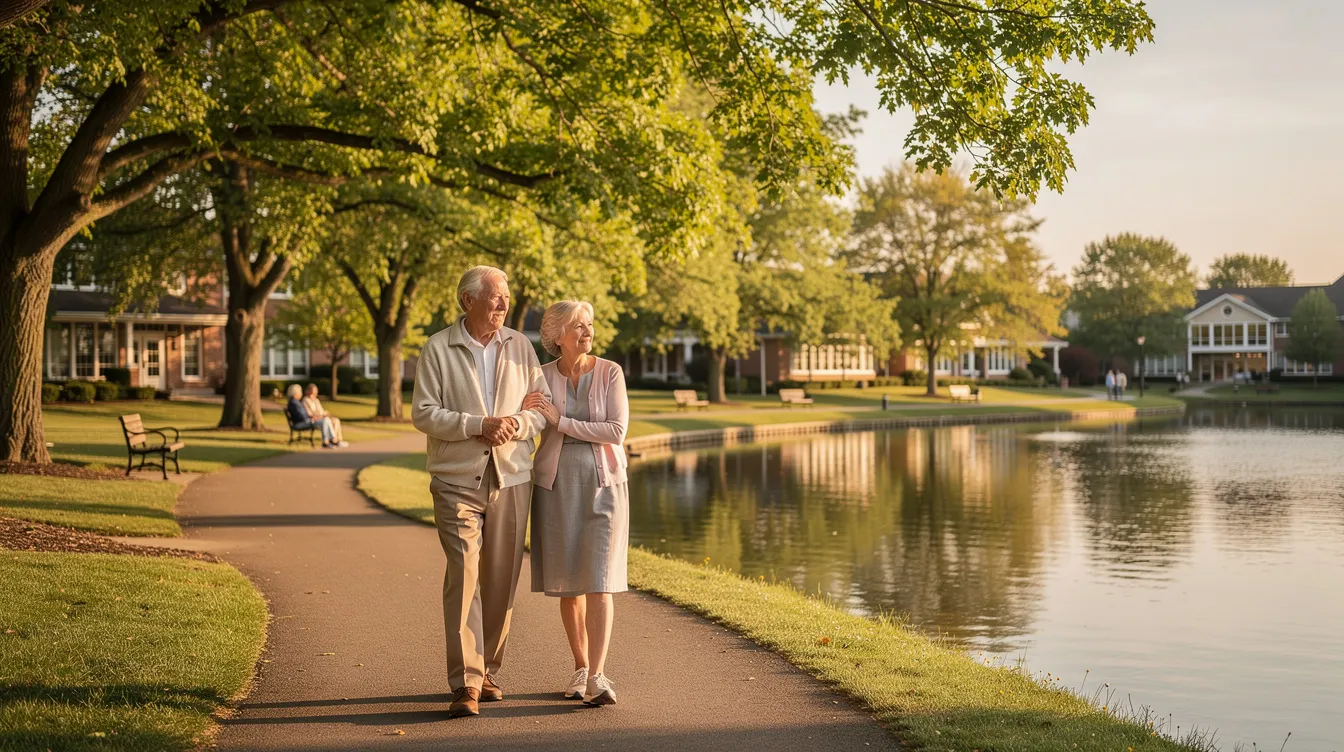
Independent Living at Skaalen: Active, Maintenance-Free Senior Living
Independent living is best for active seniors who want to downsize, shed the burden of home repairs, and enjoy a maintenance free lifestyle. Independent living communities cater to adults over age 62 who are mostly self sufficient, manage their own medications, and want freedom from yard work and Wisconsin's relentless snow removal.
Skaalen's independent living options include the Vennevoll and Skaalendal condominium neighborhoods (ranch-style, one-level homes) and Skaalen Ridge, two-bedroom apartment-style condominiums attached to the skilled nursing center for residents who want full independence with the reassurance of enhanced care nearby. Active adults here enjoy amenities like walking paths near the Yahara River, a wellness center, and on-campus worship services. Social and recreational activities range from coffee groups and Bible studies to craft circles and fitness classes. Families in the McFarland area can also explore Skaalen Village, a standalone independent living community that shares Skaalen's values and continuum of care while offering its own warm, complete neighborhood feel.
What is not included in independent living: home health care services, and transportation services. But because Skaalen is a senior living community with a full continuum, residents have easy access to therapy, health care services, and higher care levels if needs change. Costs are structured as a monthly fee covering housing, basic utilities, maintenance, and many programs. Nationally, independent living communities average around $3,145 per month, though this is a general benchmark rather than Skaalen's pricing. Because fees vary by community, floor plan, and services included, contact Skaalen for current rates.
Assisted Living at Skaalen: Help With Daily Living While Preserving Independence
Assisted living communities support seniors needing help with daily activities but who do not require full-time skilled nursing care. More than 1 million Americans reside in assisted living communities today, and the model continues to grow because it strikes a balance between independence and safety.
Skaalen offers assisted living through two communities that meet different needs along the same continuum. Skaalen Heights, a licensed Residential Care Apartment Complex (RCAC) located at 950 Ridge St in Stoughton, offers upscale one-bedroom-plus-den and two-bedroom apartments where residents live independently and add supportive services as they want them, with utilities, activities, and access to the campus therapy pool included. Heritage Center, a licensed Community-Based Residential Facility (CBRF) serving around 50 residents, offers a more structured level of support with 24/7 licensed nursing and holistic assistance with daily living. It is a homelike setting with private apartments, a shared dining room for three meals daily, and comfortable common areas where family members can visit. Typical care services include assistance with bathing, dressing, grooming, toileting, and medication management, plus housekeeping, laundry, and 24/7 on-site staff members.

What makes Skaalen's approach effective is that residents can choose the setting and level of support that fits their needs today, whether that's the scalable services at Skaalen Heights or the more structured care at Heritage Center, and can shift between them without leaving the community they know. Personal care is individualized so residents can age in place longer. Daily programming includes devotionals, exercise classes, games, music, and outings. Health care is coordinated through nurses on-site, access to local clinics in Dane County, and smooth transfers to rehab or skilled nursing on the same campus. Nationally, the median cost of assisted living reached $5,190 per month in 2024, though this is a general benchmark rather than Skaalen's own pricing, which varies by community and level of support. Families often use personal funds and long-term care insurance to pay; contact Skaalen's admissions team for current rates at each community.
Specialized Memory Care: Compassionate Support for Alzheimer's and Dementia
Memory care communities support residents living with cognitive impairments and specialize in care for individuals living with dementia. Memory care is designed for people living with Alzheimer's or other forms of dementia who benefit from secure environments and structured routines. At Skaalen, Magnolia Gardens is a Community-Based Residential Facility (CBRF) that specializes in dementia and memory care. Unlike Heritage Center, which serves residents who need general help with daily living, Magnolia Gardens is designed as a smaller, secured household where consistent caregivers provide care tailored to cognitive support and comfort.
Intentional design elements include clear sight-lines, personalized memory boxes outside each resident's door, calming color schemes, and secure walking areas. Staff members receive dementia-specific education and communication training focused on dignity, patience, and Christian compassion, helping them respond to each resident as an individual rather than a set of symptoms. Recreational activities include music and worship, simple craft projects, reminiscence groups using local Wisconsin history, and sensory experiences like baking or gardening.
Memory care includes 24/7 supervision, full assistance with ADLs, medication administration, and close coordination with family for care planning. Memory care communities typically cost more than assisted living, often 20–50% higher in Wisconsin due to specialized staffing and security, though this is a regional estimate rather than Skaalen's specific pricing; contact Skaalen's admissions team for current rates. If you feel guilty or overwhelmed about this transition for a loved one, know that moving to memory care can enhance safety, reduce stress for caregivers, and preserve relationships rather than strain them.
Skilled Nursing at Skaalen: 24/7 Nursing and Rehabilitation
Skilled nursing is the highest level of senior care. Skilled nursing facilities provide 24-hour medical supervision and nursing care for individuals with chronic illnesses, complex medical needs, or rehabilitation needs that cannot be safely managed at home or in an assisted living setting. Skaalen's Nursing and Rehabilitation Center, with capacity for approximately 70 residents, offers both short-term rehabilitation and long-term care in a supportive, medically supervised environment.
Key health care services include wound care, IV therapy, pain management, medication injections, monitoring for heart or lung conditions, and coordination with hospitals in the Madison area. Skaalen's inpatient rehabilitation features physical therapy, occupational therapy, and speech-language pathology, including a warm-water therapy pool and specialized equipment. A registered nurse is always on-site, and medical attention is available around the clock.
Some residents come for short-term rehab after a hospital stay (hip fracture, stroke, surgery) with a goal to return home, while others use skilled nursing as long term care services. Hospice care, which focuses on comfort rather than curative treatment for individuals nearing the end of life, can also be coordinated within Skaalen's skilled care environment. Medicare part A may cover limited skilled nursing after a qualifying hospital stay, but families should work with Skaalen's admissions team for current details. Nationally, skilled nursing care averages around $8,200 per month, though this is a general benchmark rather than Skaalen's specific pricing, which reflects the medical services and custodial care provided; contact Skaalen's admissions team for current details.

The Continuum of Care at Skaalen: One Campus, Many Options
CCRCs offer multiple levels of care on one campus, and Skaalen's continuum is a clear example. A resident might move into independent living in their early 70s, transition to assisted living when they need extra support with daily living, then move to memory care or skilled nursing if needs progress, all without leaving familiar surroundings.
This model also supports couples: one spouse can live independently while the other receives memory care, yet both remain on the same campus for shared worship, meals, and social opportunities. Logistical benefits include shared health records, a consistent care philosophy, and easy coordination of transportation between campus locations. The emotional benefits matter most: reduced relocation trauma, continuity of friendships and spiritual life, and long-standing relationships with staff who know each resident's history. Skaalen has served older adults in southern Wisconsin as a caring, Christian community since 1900, and this is reflected in how its campus approach has earned recognition.
How to Know Which Care Level Is Right
Deciding between independent living, assisted living, memory care, and skilled nursing can feel overwhelming. The primary tools professionals use are ADL and IADL assessments: can your loved one dress, bathe, eat, and move safely? Can they manage taking medications, prepare meals, handle finances, and arrange transportation?
Simple indicators to watch for:
- Needing reminders versus needing hands on care for bathing or dressing
- Frequent falls or unexplained weight loss
- Medication errors or confusion about time and place
- Emergency response capability, which affects the assessment of safe living arrangements for seniors
- Increasing burden on family caregivers
Not sure where to start? Skaalen's Pick Your Path tool walks families through a few simple questions and points toward the care level worth exploring first, making it an easy first step before a deeper conversation with the assessment team.
Needs can range from a little occasional help to full, hands-on assistance with daily living, and that range is exactly what Skaalen's continuum is built to support. Involve primary care providers, geriatric specialists, and Skaalen's assessment team to recommend the right starting point. Aging in place requires home modifications for accessibility, and sometimes a senior living community simply provides care more safely than home care can.
Visit Skaalen for a tour, talk with current residents, and review finances before a crisis occurs. Moving into a higher level of care does not mean losing independence; it can restore quality of life by reducing fear, isolation, and caregiver burnout.
Paying for Senior Care Levels: What Families Should Know
Costs increase as care needs and medical services increase. Note that any dollar figures mentioned in this article are general national or regional averages meant to provide a starting point for budgeting, not Skaalen's specific pricing; Skaalen's team can provide current, accurate figures for each community. Evaluating financial resources is crucial in determining long term care solutions. Common payment sources families use include personal savings, retirement income, long term care insurance, veterans benefits, and in some cases Medicaid for skilled nursing when eligibility is met.
Medicare does not pay for long-term custodial care but may cover short-term skilled nursing and rehabilitation after a qualifying hospital stay, subject to time limits and co-pays. Communities cater to different budgets, and higher costs at memory care and skilled nursing levels reflect the intensity of care provided.
Families should plan ahead: review legal documents (powers of attorney, advance directives), consider consulting an elder law attorney, and compare the long-term cost of staying at home with paid caregivers versus moving to a living community. Contact Skaalen's admissions team for up-to-date pricing on each level in Stoughton and help understanding coverage options.
Faith, Community, and Quality: Why Skaalen's Care Levels Matter
Skaalen has provided quality Christian care to seniors since 1900. At every level, care focuses on the whole person: body, mind, and spirit, through professional health care, social activities, and opportunities for prayer and worship. Recent recognitions such as "Best Nursing Homes 2026" awards provide external evidence of quality, but families often value personal stories just as much.
Residents benefit from a senior living options model where they are not customers in a facility but members of a community. As one family shared about their parent's rehab stay at Skaalen: the therapy outcomes exceeded expectations, and the sense of belonging made all the difference.
Next Steps: How to Explore Senior Care Levels at Skaalen
Schedule a tour of Skaalen's campus in Stoughton, WI, request an assessment, or call the main office for information on availability. Bring a list of questions about care services, spiritual support, visiting policies, and what each care level includes. Involve your parent or loved one in the conversation, focusing on goals like safety, independence, faith life, and social opportunities rather than the idea of moving "into a facility."
Skaalen's staff can coordinate transitions from home, hospital, or another senior living community and work with discharge planners and physicians across the Madison area. The right level of care can bring peace of mind to both seniors and their families.
FAQs: Senior Care Levels at Skaalen
How does Skaalen evaluate different senior care levels to decide which option my loved one needs?
Skaalen uses a structured assessment reviewing medical history, mobility, cognition, and ability to manage daily living tasks such as bathing, dressing, toileting, and medications. A nurse or care coordinator meets with the older adult and family, may consult with physicians and therapists, and recommends independent living, assisted living, memory care, or skilled nursing. Care level recommendations are revisited over time, especially after hospitalizations, falls, or significant changes in health or memory.
Can my spouse and I live at different care levels but stay together on the Skaalen campus?
Yes. Skaalen's continuum allows one spouse to remain in independent or assisted living while the other receives memory care or skilled nursing, all within the same community. Couples can visit daily, share meals, attend worship, and participate in campus events together, even if they live in different buildings. Staff coordinate schedules and transportation on campus to keep relationships strong.
What happens if my loved one's needs increase after moving into assisted living?
Skaalen regularly reviews residents' care plans and can increase support within assisted living as more help with daily living becomes necessary. If memory loss or medical complexity progresses beyond what assisted living can safely provide, the care team discusses options for transitioning to memory care or skilled nursing on campus. Families are always included in these conversations, and transitions are planned to minimize stress.
Does Skaalen offer short-term rehabilitation as well as long-term care?
Skaalen provides both short-term inpatient rehabilitation and long-term skilled nursing. Common short stays include recovery after joint replacement, stroke, or serious illness, often following discharge from area hospitals. Many short-term rehab patients later choose Skaalen for long-term senior living because of positive therapy experiences and the on-campus continuum of care. Recent recognitions such as "Best Nursing Homes 2026" for Short-term Rehabilitation and Long-term Care awards provide external evidence of quality, but families often value personal stories just as much.
How does faith influence daily life and care at Skaalen?
Skaalen is an affiliated ministry of the Lutheran Church, and Christian values shape its mission, staffing, and interactions with residents and family members. Practical expressions include chaplaincy services, worship opportunities, Bible studies, and prayer support offered alongside professional care. Seniors from all backgrounds are welcome, and spiritual care is offered but never forced, respecting individual beliefs and preferences.